
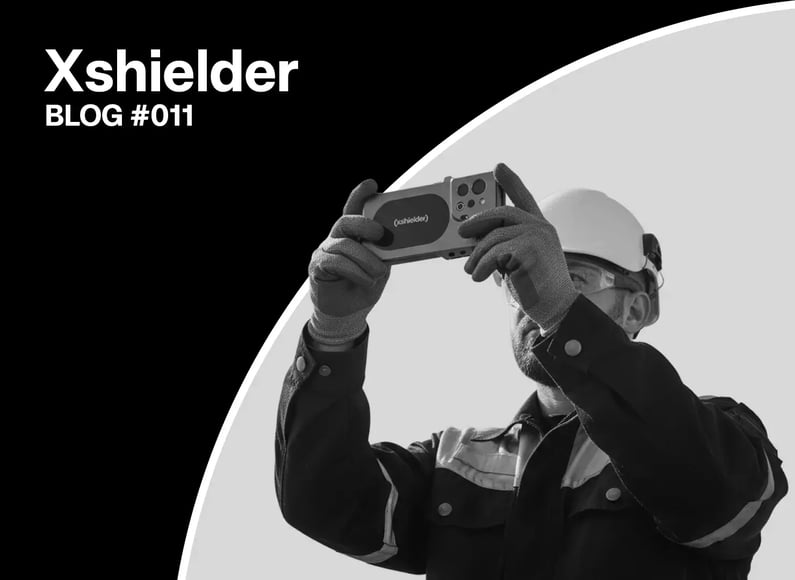
Why the Best Intrinsically Safe Video Camera is the Xshielder iPhone 16 Pro Max
The Evolution of Video Recording in Hazardous Areas
For decades, if you needed an intrinsically safe video camera for a Zone 1 environment, you had very limited choices. You either carried a heavy, expensive, purpose-built camera that shot grainy footage, or you used a ruggedized Android device with a less than mediocre image sensor.
But industrial inspection has changed. You aren't just documenting "damage"; you are capturing high-fidelity footage for digital twins, remote expert analysis, slow motion detection of anomalies.
The new Xshielder iPhone 16 Pro Max enclosure changes the game. By bringing Apple’s most advanced Pro camera system into the hazardous area, we are offering a video tool that outperforms even the flagship Android devices from Samsung.
iPhone 16 Pro Max vs. Samsung vs. Traditional IS Cameras
When you look at the raw video parameters, there is a significant difference. While Samsung’s offering for industrial use is comparable to the Samsung Galaxy XCover 7, the iPhone’s 4K at 120 fps with ProRes is the gold standard for clarity and color accuracy.
Here is how the Xshielder iPhone 16 Pro Max compares to the competition:
Apple 16 Pro Max vs Android Phones
| Feature | Xshielder iPhone 16 Pro Max | Samsung Galaxy XCover 7 | Standard IS Digital Camera |
| Video Resolution | 4K Dolby Vision @ 120 fps | 1080p @ 30 fps | Usually 1080p or 4K @ 30 fps |
| Video Codec | Apple ProRes Log (Cinema Grade) | HDR | Standard MP4 (Compressed) |
| Stabilization | Action Mode (Gimbal-like) | Steady | Basic Electronic Stabilization |
| Microphone | 4 Studio-Quality Mics with Wind Reduction | Stereo Mics | Mono / Basic Stereo |
| Screen Brightness | 2000 nits (Outdoor Peak) | 800 nits (Peak) | ~500-1200 nits (Hard to see in sun) |
| Workflow | Shoot, Edit, & Upload on-device | Android OS | Must transfer SD card to PC, or wirelessly |
| Sensor | 48MP Fusion | 20MP (High noise in low light) | 5MP - 12MP (Small sensors) |
Why "Video Quality" Matters in Hazardous Areas
You might ask, "Why do I need 4K ProRes for a pipeline inspection?"
-
Vibration Analysis: With 4K at 120 fps, you can slow down footage of rotating machinery (like turbines or pumps) to visually identify vibration issues that are invisible to the naked eye.
-
Low Light Performance: Hazardous areas are often poorly lit (e.g., inside storage tanks). The iPhone’s larger sensor and "Photonic Engine" capture usable evidence where traditional intrinsically safe video cameras only capture darkness.
-
Audio Diagnostics: The iPhone 16 Pro Max features Audio Mix, allowing you to isolate voice notes from background machinery noise. This is critical when narrating an inspection video in a loud refinery.
Beyond the Lens: Why a Phone Beats a Dedicated Camera
Purchasing a dedicated intrinsically safe video camera often costs $2,000 - $3,000. For that price, you get a device that only takes pictures.
With the Xshielder iPhone 16 Pro Max, you get a "Swiss Army Knife" for the field:
-
Connectivity: Upload footage instantly via 5G or Wi-Fi to Microsoft Teams or your ERP system. A dedicated camera requires you to return to the office and plug in a cable.
-
App Ecosystem: Use apps from your other vendors to upload images directly, or use the dedicated camera app.
-
The "Airplane Mode" Battery Hack: Dedicated cameras often suffer from poor battery life. The iPhone 16 Pro Max is rated for 33 hours of video playback. However, in an industrial setting, if you switch the device to Airplane Mode (using it solely as a camera), the battery can last for multiple 12-hour shifts on a single charge.
Conclusion
The days of carrying a separate, clunky camera are over. The best intrinsically safe video camera is the one that fits in your pocket, connects to your team, and shoots cinema-grade 4K footage.
Equip your team with the ultimate inspection tool. Learn why the Xshielder iPhone 16 Pro Max Solution is the ideal intrinsically safe camera.
Curious to learn more about Xshielder?